

A proposal and a contract are not the same, and confusing them can cost you. Here is what each does, how they relate, and when a proposal becomes binding.
A proposal and a contract often cover the same project, sometimes contain the same words, and are frequently confused for one another. But they do different jobs, and treating one as the other can leave you exposed or cost you the work. Knowing where a proposal ends and a contract begins protects both you and your client.
Propelio is proposal software used by freelancers and small agencies to write and send proposals that win client work, and the proposal-versus-contract question comes up constantly. This guide explains what each document is, how they relate, and the point at which a proposal becomes legally binding.
What is a proposal?
A proposal is a document that makes the case for your work. It sets out the client's problem, your recommended approach, what you will deliver, the timeline, and the price. Its job is persuasion: to show the client you understand the brief and are the right person to handle it.
A proposal is forward-looking and, in its pure form, not yet an agreement. It is an offer. The client reads it, decides whether your approach and price work for them, and either accepts, declines, or asks for changes.
Because its purpose is to win the work, a good proposal is structured around the client and the value you bring, not around legal protection.
If you are also weighing up quotes and estimates, our guide to proposal vs quote vs estimate covers where each one fits.
What is a contract?
A contract is a legally binding agreement. It defines the obligations of both parties: what you will do, what the client will pay, and what happens if either side does not hold up their end.
Where a proposal persuades, a contract protects. It covers the things a proposal usually does not: payment schedules and late-payment terms, intellectual property and who owns the work, liability, confidentiality, what happens if the project is cancelled, and how disputes are resolved.
A contract is backward-looking in spirit. It exists so that if something goes wrong, there is a clear, agreed record of what both parties committed to.
How the two documents relate
In practice, a proposal and a contract are two stages of the same journey from conversation to signed work.
The usual sequence looks like this:
- You discuss the project with the client.
- You send a proposal setting out your approach, scope, and price.
- The client accepts the proposal.
- A contract formalises the agreement, often referencing the scope and price the proposal already defined.
The proposal does the selling. The contract does the protecting. The scope and pricing agreed in the proposal usually flow straight into the contract, which is why the two documents share so much language.
When does a proposal become binding?
This is where confusion causes real problems. A proposal can become legally binding, depending on how it is written and accepted.
If a proposal contains a clear offer, the client accepts it, and there is consideration (the exchange of work for payment), it can form a binding agreement even without a separate document labelled "contract". A signed proposal that includes terms and conditions often functions as a contract in its own right.
This cuts both ways. It means a well-constructed proposal can close the deal and create the agreement in one step, which is efficient. It also means you should never treat the pricing or scope in a proposal as casual, because a client may hold you to it.
If you want a proposal to be binding, include your terms and a clear acceptance step, such as a signature. If you want it to remain a non-binding offer, say so explicitly, and follow it with a separate contract.
This is general guidance, not legal advice. For anything significant, or where the stakes are high, check the specifics with a solicitor in your jurisdiction.
Can one document do both jobs?
Often, yes, and for many freelancers this is the practical sweet spot.
A proposal that includes a scope, a price, your terms and conditions, and a signature block can serve as both the pitch and the agreement. The client reads the case for your work, sees the price, accepts the terms, and signs, all in one place. There is no second document to chase.
This works well for straightforward projects. For larger or higher-risk engagements, a separate, more detailed contract is worth the extra step. The proposal wins the work; the contract handles the complexity.
If your proposal is doing double duty, make sure the terms are genuinely there and genuinely clear. A signature on a document with no terms protects no one.
The strength of the proposal underpins all of this. See what makes a strong business proposal for the elements that move a client to sign.
Where e-signatures fit
The line between proposal and contract has blurred partly because signing has become so easy. When a client can sign in their browser, the moment of acceptance happens inside the proposal itself.
Proposal software that includes e-signatures lets a client read your proposal, accept your terms, and sign without printing anything. The signed record is timestamped and stored, which gives both sides a clear account of what was agreed and when. That record is exactly what you would want if a question ever arose later.
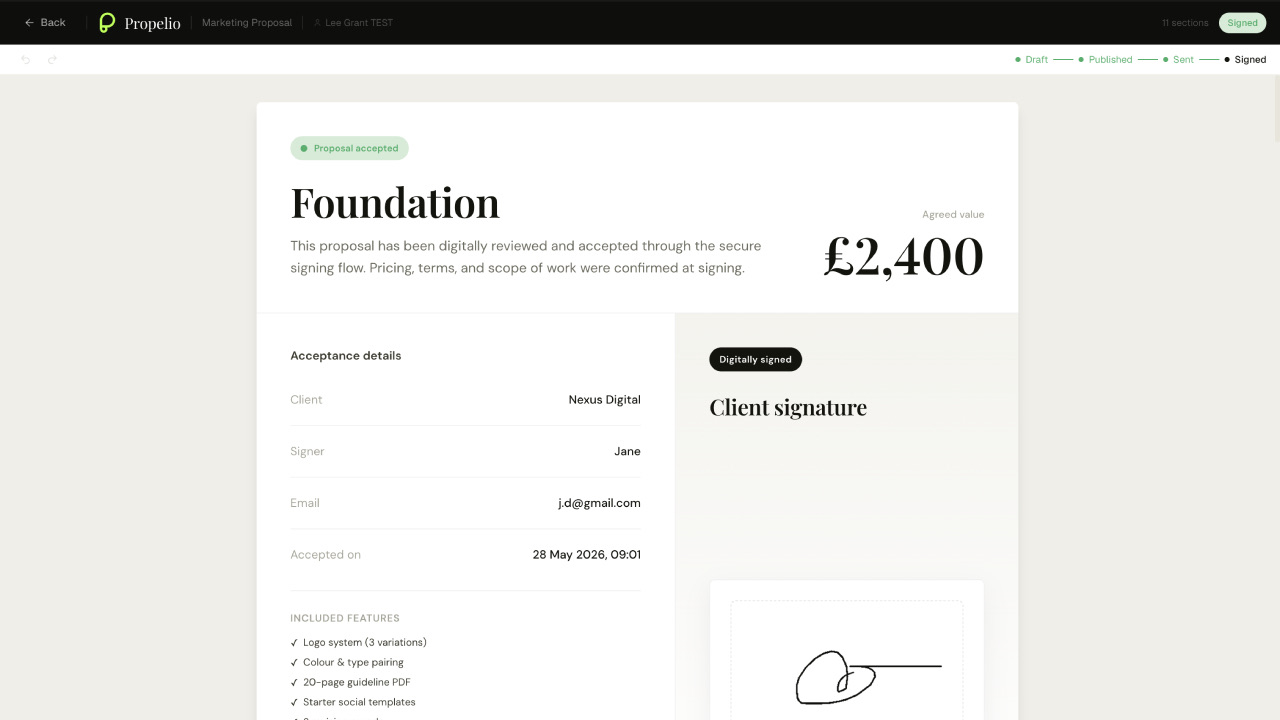
A client accepts the terms and signs in the browser. Propelio stores a timestamped record of exactly what was agreed.
Browse Propelio's proposal templates to see how a proposal can carry scope, pricing, terms, and a signature in a single document.
Frequently asked questions
Is a proposal legally binding? It can be. If a proposal contains a clear offer, is accepted by the client, and involves an exchange of work for payment, it may form a binding agreement, especially if it includes terms and a signature. If you do not intend it to be binding, state that clearly.
Do I need a contract if I have a signed proposal? Not always. A signed proposal that includes your terms and conditions can function as a contract for straightforward work. For larger or higher-risk projects, a separate contract that covers liability, IP, and dispute resolution is worth having.
What is the main difference between a proposal and a contract? A proposal persuades: it makes the case for your work, your approach, and your price. A contract protects: it sets out the binding obligations of both parties and what happens if something goes wrong. One sells the work, the other secures it.
Can a proposal and a contract be the same document? Yes. A proposal that includes scope, pricing, terms, and a signature block can serve as both. This is common and efficient for simpler projects. Just make sure the terms are actually present and clearly written.
Should the proposal or the contract come first? The proposal, almost always. You pitch with a proposal, the client accepts, and a contract then formalises the agreement, often reusing the scope and price the proposal set out. For simple work, a signed proposal with terms can collapse both steps into one.
The bottom line
A proposal persuades. A contract protects. They cover the same project from different angles, and they often share the same language, but they are not interchangeable.
For many freelancers, a well-written proposal with clear terms and a signature does both jobs at once. For bigger or riskier work, keep them separate and let each do what it does best. Either way, be deliberate about which document you are sending and what it commits you to.
To build a proposal that can carry your terms and a signature in one place, browse the templates or start a free workspace.


